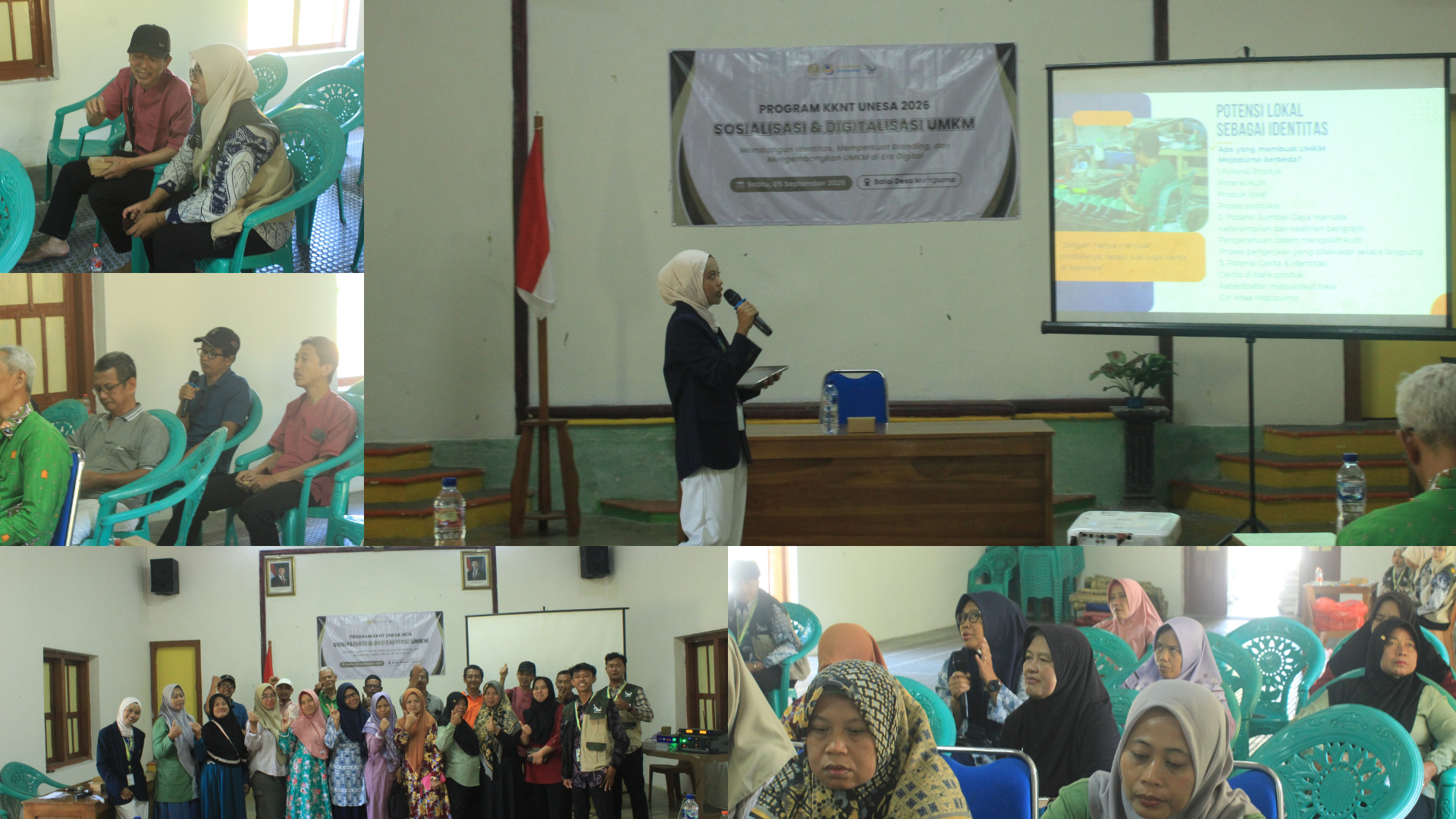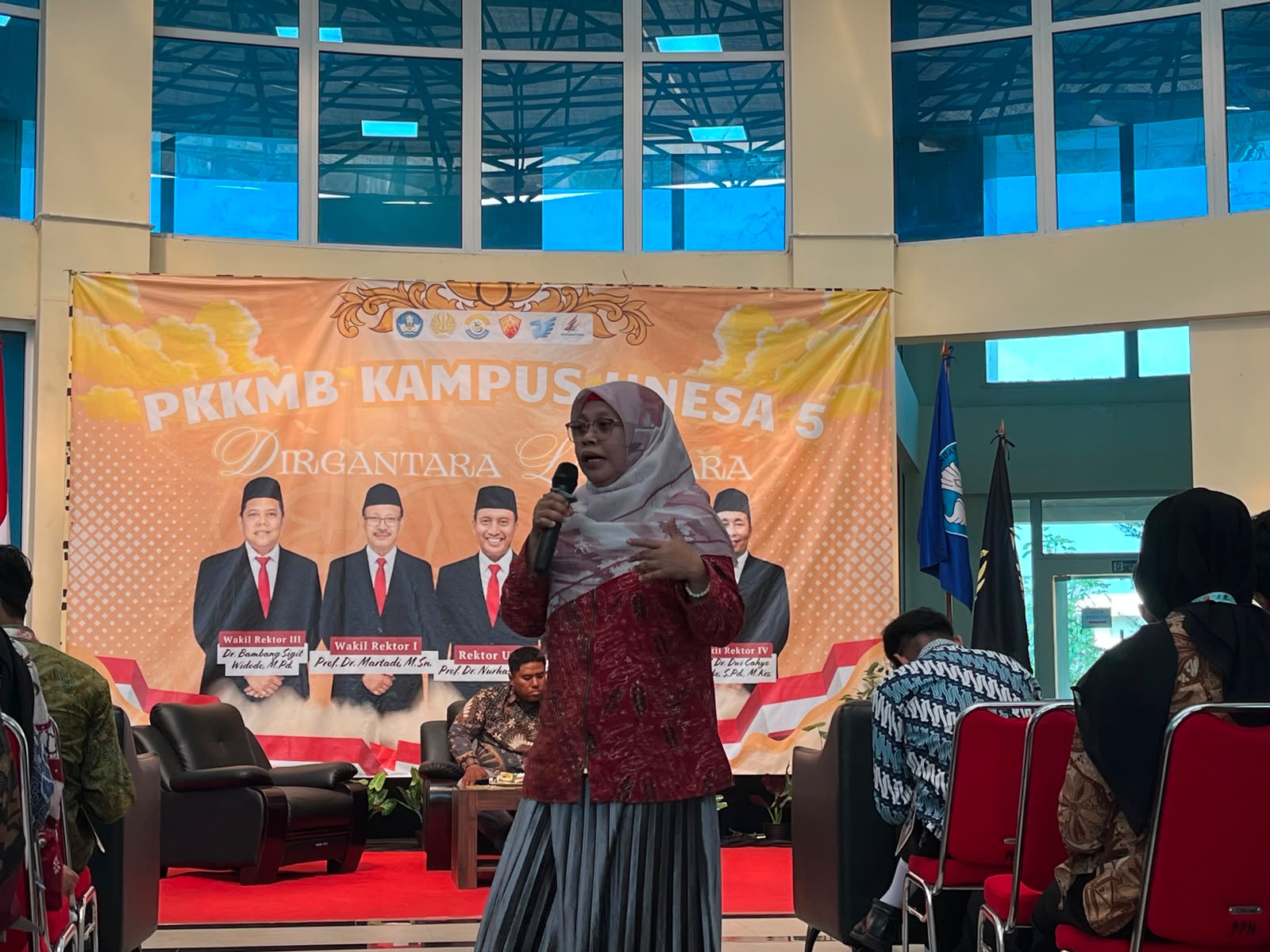
MAGETAN, East Java — Creating a safe and supportive university environment became a key focus on the second day of the Campus New Student Life Introduction (PKKMB) at UNESA Campus 5 on Wednesday, August 19, 2026.
The issue was highlighted by UNESA PPIS Director Prof. Dr. Muttimmatul Faidah, M.Ag., during a session titled “Building UNESA into a Safe Campus.” She encouraged new students to understand various forms of violence and to become responsible users of digital technology.
Prof. Muttimmatul particularly drew attention to verbal and non-physical sexual violence that can occur in digital spaces, including WhatsApp groups and other social media platforms.
She stressed that students need to understand the risks of digital interaction while also recognizing the different forms of violence that may occur within the university environment.
The initiative is aligned with the United Nations Sustainable Development Goals (SDGs), particularly SDG 16 on Peace, Justice and Strong Institutions, SDG 5 on Gender Equality, and SDG 4 on Quality Education.
Six Forms of Violence Students Need to Recognize
During her presentation, Prof. Muttimmatul outlined six forms of violence that students should be aware of: physical violence, psychological violence, bullying, sexual violence, discrimination, and intolerance, including policies or practices that contain elements of violence.
Digital-based sexual violence, she said, has become a particular concern. One of the patterns that students need to be aware of is so-called “love scamming.”
In such cases, perpetrators may build emotional relationships and gain a victim’s trust before requesting private photographs or videos. Such material can later be used for blackmail or threats of exposure.
To prevent students from becoming victims, Prof. Muttimmatul urged them to apply digital ethics in all online activities.
“Respect others, protect your privacy, think before you act, be responsible, and remember that your digital footprint shapes your future,” she emphasized.
Students Encouraged to Say No and Report
The discussion also addressed concerns about the safety of students who report acts of violence.
Prof. Muttimmatul explained that the Task Force for the Prevention and Handling of Sexual Violence (Satgas PPK) plays an important role in providing protection and assistance to victims.
UNESA Campus 5 also provides counseling services through @nadikita.unesa5 for students who need support.
Students experiencing threats or unhealthy social environments are encouraged to distance themselves from toxic circles and report incidents to the Satgas PPK.
Prof. Muttimmatul also addressed the phenomenon of fear of missing out (FOMO), encouraging students to build positive social circles and have the courage to establish healthy boundaries.
“Dare to say no, stop, refuse, take a stand, and set limits,” she advised.
In her concluding remarks, Prof. Muttimmatul emphasized that creating a safe campus does not mean eliminating every problem. Rather, it means building an environment that is prepared to provide support when problems arise.
“A safe campus is not one without problems. A safe campus is one with an environment capable of understanding, showing empathy, providing support, and fostering the courage to speak up rather than silencing voices,” she concluded.
Through the PKKMB program, UNESA Campus 5 seeks to equip new students not only with academic knowledge but also with awareness, responsibility, empathy, and courage to contribute to a safe and inclusive educational environment.(goes)
About The Author